Angela K. VandenBroek, PhD Anthropologist of Innovation (and all the hype that entails)

Mentoring

Current Availability

Prospective MA & PhD Students

I typically maintain 4-5 positions in my graduate student workgroup with 1-2 positions opening each year. For more information, see the TXST Anthropology MA program and Applied Anthropology PhD program websites.

Interested in working with me as a graduate student? This is what I look for in student applications.

  1. Does the student meet the minimum program requirements? Applications are rejected by the graduate college before I even see them if students do not meet the minimum GPA and degree requirements. So, double-check before applying.
  2. Do I have the expertise and experience neccessary to support this student? I only accept students who have research interests in areas that I have sufficient ability to support their professional and research goals. Read through this website, including my research and students' research to get an idea of what areas I support. If you're unsure, send me an email with your interests.
  3. Is this student going to be able to complete the program on time? Our program has a strict timeline (MA is 2 years; PhD is 5 years) intended to reduce costs and support your professionalization (there are accomodations, if needed). So, it is vital that your application presents a focused and feasible research area for your thesis/dissertation. This does not need to be completely fleshed out and things will likely change during your time in the program. But show me that you have a solid understanding of your own interests and how to appropriately scope them for the time you'll have. For example, do not pitch a project that is impossible to study in one summer (MA) or one year (PhD) of fieldwork.

Mentorship

Throughout my career I have had the privilege and benefit of having generous mentors who helped me navigate my academic and professional journeys. Whenever I am able, I am happy to meet and email with students, junior professionals, and peers seeking mentorship. Please reach out via email at [email protected] and explain in what areas you are seeking mentorship (e.g., research, professionalization, transitioning to practicing career, etc.) and why you think I am a good person to help you (e.g., shared research interests, shared professional interests, etc.). These should just be a sentence or so each—just enough to help me understand if I have the knowledge and experience to support you or if I should recommend a more suitable connection.

I also highly recommend CASTAC-Net, The CASTAC Mentorship Program. We pair up people based on mentorship interests before the AAA Annual Meeting each year for in-person or virtual meetups.

Alumni

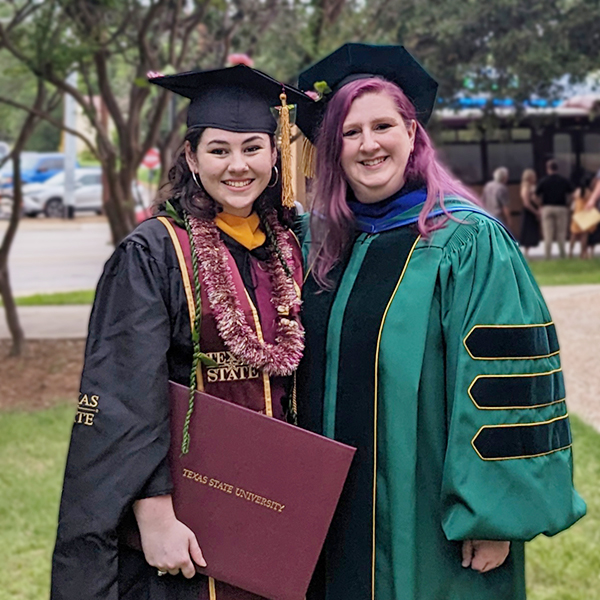
I have had the absolute pleasure of working with phenomenal graduate students who constantly inspire me. I am so proud to share these completed theses.

Photograph of Ian Whitehead
Ian Whitehead

MA (2025)

Research Areas: cultural anthropology, RV parks, archaeology

Thesis: Ethnology of Older People Living in RV Parks

This research aimed to investigate the experiences of older people living in RV parks. There are numerous options for older citizens to consider when deciding how to spend their retirement years. We live much longer now and generally have 20 - 30 years to fulfill. Between 2010 and 2020, the U.S. Population aged 65 and over experienced the fastest increase in the older population since the 1880s-1890s. The 65 and older demographic increased by 15.5 million during this period. This growth was primarily driven by aging baby boomers (born between 1946 and 1964) who began turning 65 in 2011. (Census.gov). The primary concern for retirees is how to achieve a “good life—a life that they value and find meaningful” (Fischer 2014, 202). Older people are a growing demographic, and the option to lead fulfilling lives in their later years is one of the most significant lifetime decisions they will make, which will significantly impact the quality of their final stage on this planet. This study will investigate how and why older people are building good lives in RV parks beyond the aspirational stories popular in RV and “van life” influencer blogs and social media and the marketing materials of RV organizations and businesses. However, the growing number of older people moving to RV parks and the expansion of RV parks suggest that this choice is a viable alternative, or perhaps even a preferred way of life, for some in their later years. I argue that RV living may fulfill more than just basic needs and offer a better quality of life beyond mere subsistence. In the following chapters, this research examines the experiences of older adults who reside in RV parks. It establishes the various motivations and reasons why this demographic chose this lifestyle.
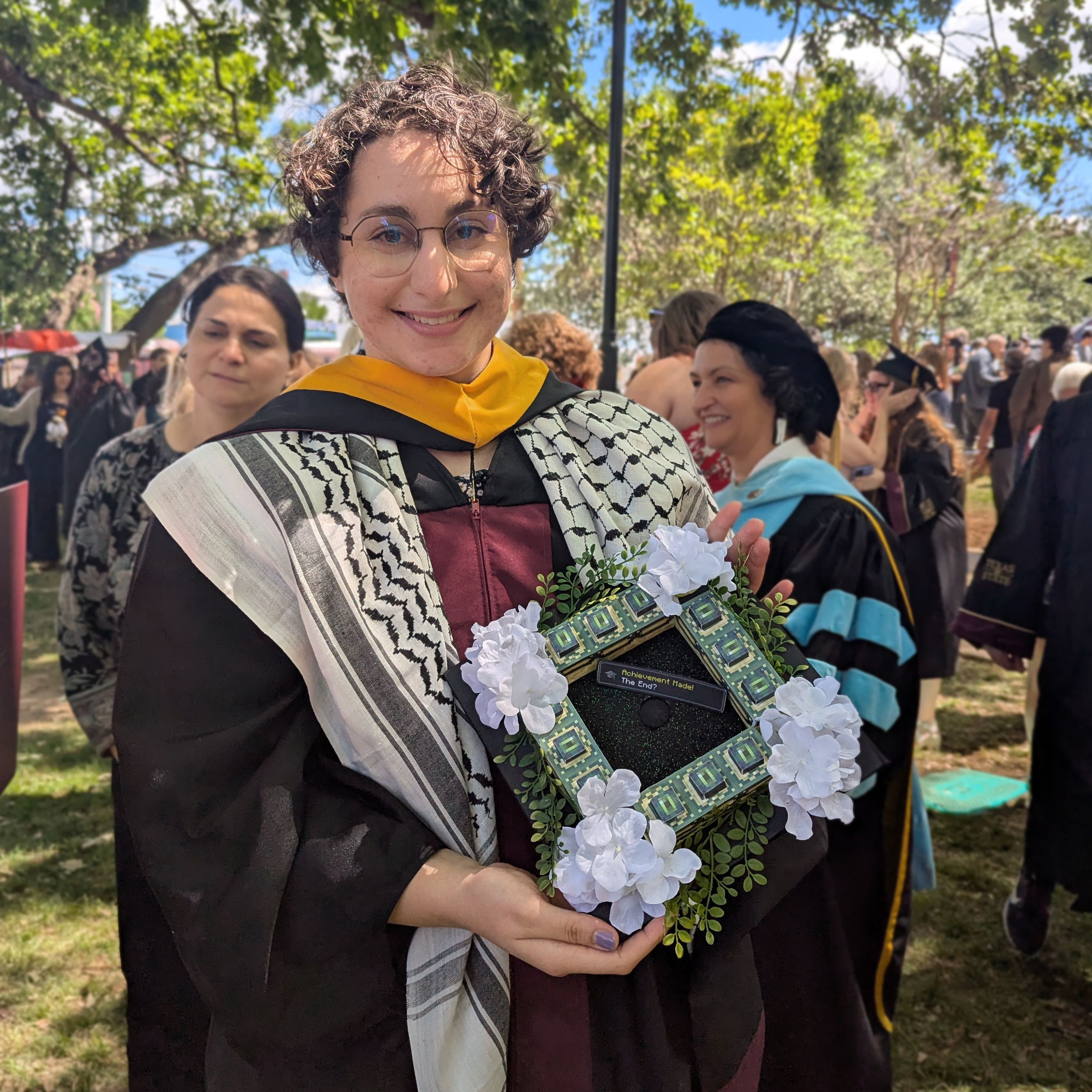
Photograph of Manar Naser
Manar Naser

MA (2025)

Research Areas: digital anthropology, science and technology studies, AI, social media, internet culture

Thesis: The Future is Here: AI Philosophies Among Central Texas Entreprenerus

The discussion, hype, and production of technologies entrepreneurs are calling AI have surged over the past several years. Hype surrounding AI has shaped the way we think about it. Whether we view AI as a boon or bane in society is partially dependent on who or what we listen to and the subsequent ideas and philosophies we adopt. In this thesis, I decided to explore this concept among entrepreneurs in Central Texas to investigate how they think about AI and, therefore, the future. I aim to answer the following question: How do AI philosophies influence Central Texas entrepreneurs’ conceptions and ambitions for the future? This question is answered in several ways, but they ultimately lead to the same conclusion: ideologies and values from leaders in Big Tech trickle down into local entrepreneurial ecosystems, thus disseminating ideas of the future that promote inequality and isolated innovation. AI philosophies are present in entrepreneurial ecosystems through meetups, mentorships, and professional organizations. These philosophies push an insular form of innovation that relies on narratives of hype rather than positive societal impact.

Research Areas: infrastructure, citizenship, communities, neoliberalism, capitalism, design, advocacy

Thesis: Pedaling Through Citizenship in San Marcos

Cycling and bike infrastructure are an important part of modern city design. Cycling Citizenship explores the relationship cyclists have with the state through road infrastructure. It is a type of infrastructural citizenship where certain rights and protections are not always guaranteed. Through participant observation and 20 interviews with local cyclists, I argue that cycling citizenship is characterized by prioritizing safety in the face of neoliberal development practice’s power ecosystem. The result of this study concludes that when the state prioritizes cars over other modes of mobility using infrastructure as a medium with infrastructure funding, design, and enforcement, it creates an unsafe environment for non-cars. Roads then become a medium of segmentation for the community. The type of advocacy that cyclists employ then are the choices they make on the road to prioritize their safety while transforming the space from a transportation one to a sustainable, healthy, acts of choices multilayered and situated within a community.

Research Areas: disability, invisible disability, delegitimization, disability identity, medical invisibility, legitimation, social model of disability, critical disability theory

Thesis: No, I'm Not Too Young to be Disabled": The Intersection of Age and Invisibility in the Delegitimizing Experiences of Disabled Young Adults

Sixty-one million adults in the United States are living with a disability. Of those, 10% are conditions that are “invisible.” Invisible disability is not as easily seen as the outwardly expressed, highly visible disabilities that most people think of, and consequently may be overlooked in an able-bodied society. Young adulthood is commonly thought to be the healthiest time in a person’s life, as well as a developmental stage where independence, social relationships, and identity are expanded. Experiences of invisible disability during young adulthood contradict the social expectations and stereotypes about disability. My research steps into the various spheres of invisibly disabled young adults’ lives to understand how the intersection of age and visibility come together to produce experiences of delegitimization—the questioning, judging, and challenging of claims to disability by others—in the negotiations of identity and experiences in education, employment, and medical care. Through interviewing participants about their experiences with disability, and my own experiences as an invisibly disabled young adult, I have found that the interplay of age and visibility produce unique experiences of delegitimization in all aspects of life, increases the barriers for invisibly disabled young adults to achieve adulthood, and suspends invisibly disabled young adults into liminal spaces in multiple areas of their lives, from identity to independence.