Angela K. VandenBroek, PhD Anthropologist of Innovation (and all the hype that entails)

Innovation & Hype Research

Public Talks & Posts

Angela VandenBroek on Anthropology in Business

Podcast

2022. Anthropology in Business

Hosted by Matt Artz

In this episode of the Anthropology in Business podcast, Angela VandenBroek speaks with Matt Artz about her career as a business anthropologist. The conversation covers Angela’s journey from consulting and studying innovation, to teaching applied anthropology at Texas State University.

A Very Lengthy Swedish Introduction: Hype, Storytelling, and the Question of Entrepreneurial Allies

Blog Post

2021. Platypus, The CASTAC Blog.

Post Series edited by Johannes Lenhard

At a Stockholm entrepreneur meetup, Per and Jonna pitched their startup, Forests, to venture capital investors (VCs), aiming to use crowdsourced data from forest enthusiasts to aid climate research. Despite a mission-focused presentation, emphasizing conservation and community impact, the VCs found the pitch unclear on how the app would be profitable. Throughout a year of field research in Stockholm's entrepreneurial ecosystem, I observed the importance of hype in startup success, which often clashed with Swedish cultural norms of humility. Hype, seen as necessary for engaging VCs, was frequently misunderstood as cynical or deceptive. Effective hype storytelling, however, involves credible projections of future success. While VCs focus on profitability, other potential allies might prioritize sustainability and community impact. The challenge lies in balancing these narratives to enroll diverse allies and rethink startup priorities beyond just rapid growth and profit.

Academic Publications

Anthropology and AI

Edited Volume

2026. Anthropology of Now Series. Routledge.

Edited by Lora Koycheva, Angela K. VandenBroek, & Matt Artz

Anthropology and AI explores the complex intersection of artificial intelligence and human society through a diverse collection of anthropological and social scientific perspectives. Artificial intelligence is rapidly accelerating and permeating the everyday lives of people around the world in ways that are full of promise, perils, and potentials. How does anthropology respond to this? This timely volume brings together twelve carefully curated chapters examining AI’s many manifestations—from machine listening and engineers’ philosophies to large language models and conversational agents. Curated with a broad humanistic and social scientific audience in mind but firmly rooted within broader anthropological and STS conversations about humanity and technology, the contributions are situated on a broad spectrum of approaches to artificial intelligence, spanning theoretical, empirical, and applied social scientific research. Anthropology and AI will appeal to students and researchers across anthropology, science and technology studies, digital humanities, and computer science who are interested in critical perspectives on emerging technologies.

The Bullshit Problem: Re-Thinking the Epistemic Stakes of AI

Chapter

Forthcoming (2026). In Anthropology and AI, edited by Lora Koycheva, Angela K. VandenBroek, and Matt Artz. Anthropology of Now Series. Routledge.

Since the launch of ChatGPT in 2022, generative artificial intelligence (GenAI) has proliferated across the tech industry, accompanied by a persistent critique: it produces bullshit. Not lies, but outputs shaped by statistical correlations with no regard for truth—what Frankfurt called the sociolinguistic condition of bullshit. This framing, however, misses the point. In this chapter, VandenBroek argues that the real issue is not bullshit as a technical flaw but as an epistemology—one that obscures the origins, logics, and commitments behind its knowledge. Using Dumit’s implosion project, she compares the epistemics of different AI systems and anthropology to draw out the distinctive differences that she argues draw us toward more productive frameworks for thinking about and living with AI. Symbolic AI and anthropology offer situated, partial ways of knowing, while GenAI generates a new monstrous, situated and partial position constructed from the tokenized scraps of other’s lives, thoughts, writing, and art with each response—what she calls a bullshit epistemology. This chapter challenges the assumption that the solution lies in fixing GenAI’s confabulations. Instead, she asks what GenAI reveals about our expectations for AI and how we might live with them more deliberately.

Introduction: An Anthropological History of AI

Chapter

2026. In Anthropology and AI, edited by Lora Koycheva, Angela K. VandenBroek, and Matt Artz. Anthropology of Now Series. Routledge.

with Matt Artz and Lora Koycheva

This introduction traces the extensive but underrecognized history of engagement between anthropology and artificial intelligence, revealing a mutually influential relationship spanning seven decades. Rather than positioning anthropological interest in AI as merely reactive to recent developments, we demonstrate how anthropologists have consistently participated in shaping, critiquing, and reimagining AI systems since cybernetics research. We argue that anthropological perspectives remain essential for contextualizing AI as a complex sociotechnical phenomenon shaped by cultural assumptions and varied forms of agency.

Conclusion: Editorial Forum on the Futures of Anthropology and AI

Chapter

2026. In Anthropology and AI, edited by Lora Koycheva, Angela K. VandenBroek, and Matt Artz. Anthropology of Now Series. Routledge.

with Lora Koycheva (1st Author) and Matt Artz (2nd Author)

This conclusion employs an editorial forum format to explore the complex relationship between anthropology and artificial intelligence. Through dialogue, the editors evaluate present entanglements between anthropology and AI, examining what these developments mean for the field more broadly. Key themes include the discipline's declining institutional position, methodological challenges posed by AI, and competing visions for anthropology's future relevance. The forum illuminates productive disagreements about whether anthropologists should prioritize critical distance or embedded participation in AI development, ultimately framing current disciplinary challenges as opportunities for reinvention. By making visible the editorial process and intellectual tensions, the conclusion demonstrates how anthropological knowledge is constructed through dialogue while envisioning diverse future trajectories for the field. The format itself becomes a methodological statement about collaborative knowledge creation in anthropology.

Special Section: Sandbox Innovation

Edited Special Section

2024. Practicing Anthropology 46 (1)

Edited with Lora Koycheva

In this collection, we explore an entrepreneurial practice, innovation sandboxing—that is, to separate innovation practices into a safe, confined “play” space like a playground sandbox. Once moved outside the sandbox through a launch, release, or publication, innovation must contend with all the complexities of social life that cannot be wholly predicted or accounted for. Innovators, such as the entrepreneurs, academics, and policy makers that appear in this collection, often find these complexities unsafe and damaging to innovation, leading to the rise of sandboxes to protect and nurture it.

Sandbox Innovation: Potentials and Impacts

Article

2024. Practicing Anthropology 46 (1): 36–45

Written with Lora Koycheva

We introduce this collection on "sandbox innovation," where innovative practices are separated and nurtured within a confined, risk-controlled environment, akin to a child’s sandbox. Originating in software development as a protective mechanism for experimental tasks, the sandbox concept has expanded to the entrepreneurial realm, offering a "safe space" for experimenting with new ideas. While such frameworks, including hackathons and incubator programs, foster creativity without the hindrances of real-world complexities, they also raise critical questions about the real-world applicability and responsibilities of innovations once they exit these controlled environments. This paper further explores the anthropology of entrepreneurship, revealing how sandboxing has become both an explicit and implicit practice within innovation ecosystems. Drawing upon various perspectives, the research calls for a deeper examination of the sandbox’s boundaries, emphasizing the need for ongoing, responsive innovation that takes into account the ever-evolving intricacies of social life and the broader responsibilities of real-world impact.

Like Clockwork: Experts and Expertise in Stockholm’s Startup and Innovation Ecosystem

Article

2022. Journal of Business Anthropology 11 (2): 168-194

SthlmTech, Stockholm’s startup ecosystem, is famous for being an innovation hub that produces more billion-dollar startups per capita than anywhere else except Silicon Valley. This success, people within the community say, is down to the ecosystem of organizations and experts that facilitate the creation and growth of startups via a well-organized curriculum that guides entrepreneurs through the “business” of starting-up. In this article, I examine this understanding of the ecosystem as a neutral, smooth, and ordered apparatus for maximizing the speed and efficiency of innovation. Specifically, I challenge how this popular conception of the ecosystem conceptualizes expertise and experts as mechanistic components ready to be deployed along the path of entrepreneurs training. By analyzing the expertise of ecosystem experts in practice, this paper aims to demonstrate what the ecosystem curriculum foregrounds and what it obscures and how the ideas behind this curriculum shape much more than routine business procedure.

Pitching Hype: Storytelling and Entrepreneurship

Chapter

2022. In Anthropology and Entrepreneurship: The Current State of Research and Practice, edited by Edward Liebow and Janine Chiappa McKenna, 49–58. American Anthropological Association.

Public pitching events at meetups, conferences, and competitions are promoted as a way to showcase curated entrepreneurs and provide insight into the pitching process and investors' perspectives. Attendees included aspiring and established entrepreneurs, investors, educators, mentors, and business agency employees. These events taught the audience how to effectively hype products, startups, and ideas, a skill deemed essential for entrepreneurial success. However, hype was a controversial tactic, often ignored and seen as a form of cynical aggrandizement conflicting with Swedish social norms. Despite this, hype was crucial for storytelling that attracted allies who could provide resources, advice, expertise, and networks. It acted as the connective tissue of entrepreneurial projects, yet its value was overshadowed by negative perceptions, diverting its use toward the interests of a few community actors, particularly VC investors.
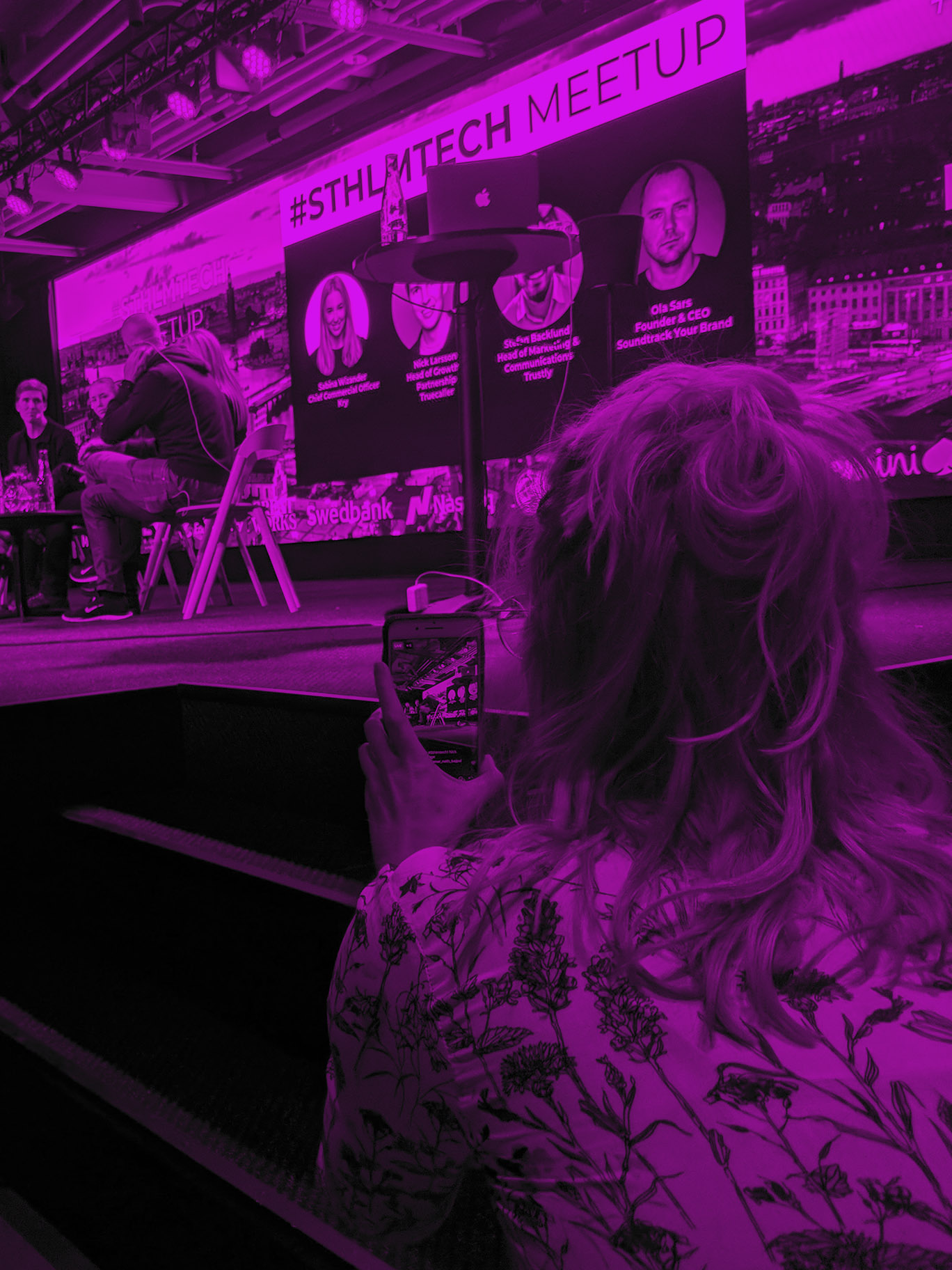
Disrupting SthlmTech: An Anthropological Guide to Stockholm’s Innovation Ecosystem

PhD Thesis

2021. PhD diss., Binghamton University.

Advised by Douglas R. Holmes

In 2013, entrepreneurs, investors, and enthusiasts at the Hilton Slussen in Stockholm created the hashtag #SthlmTech to represent Stockholm's growing innovation ecosystem. This network joined other global hubs like Silicon Valley and London, supporting entrepreneurship and venture capitalism. With a high number of billion-dollar startups, SthlmTech gained a reputation as an innovative "unicorn factory." I spent a year conducting anthropological fieldwork in SthlmTech, observing and interviewing various stakeholders to understand the concept of innovation. I discovered that the ambiguity in "innovation" helps SthlmTech promote venture capitalist-driven entrepreneurship, redirecting the goals of aspiring entrepreneurs. I argue that innovation ecosystems are not neutral but instead perpetuate standardized forms of innovation that serve venture capital interests. To foster more flexible and impactful social change, I propose identifying and abandoning the current innovation culture in favor of more diverse and collaborative approaches.

The Curators of Sweden began in 2011 when two official governmental agencies, the Swedish Institute and VisitSweden, gave a Swedish citizen full and seemingly unfettered control of the official Twitter account of the Swedish government. Every week since then, a new Swedish citizen has been given access to write as @sweden, to curate Swedishness for the Internet. From this project, others have extracted the technology of #RotationCuration to develop similar projects, representing cities, states, countries and ethnic groups. However, in comparison to the Curators of Sweden, these #RotationCuration projects have been failures with small follower counts, minimal press coverage, and the inability to recruit curators. I argue that the reduction of the Curators of Sweden to its technology, i.e. #RotationCuration, is a form of technological solutionism that impoverishes our understanding of the project and is ultimately the reason behind the failure of #RotationCuration as a solution for democratic engagement with branding and group identity. To this end, I will contextualize the Curators of Sweden into the history of Swedish Modernism and Swedish nation branding that shaped the creators’ choices in design, development, and platforms to demonstrate the complex milieu that has led to @sweden’s success.